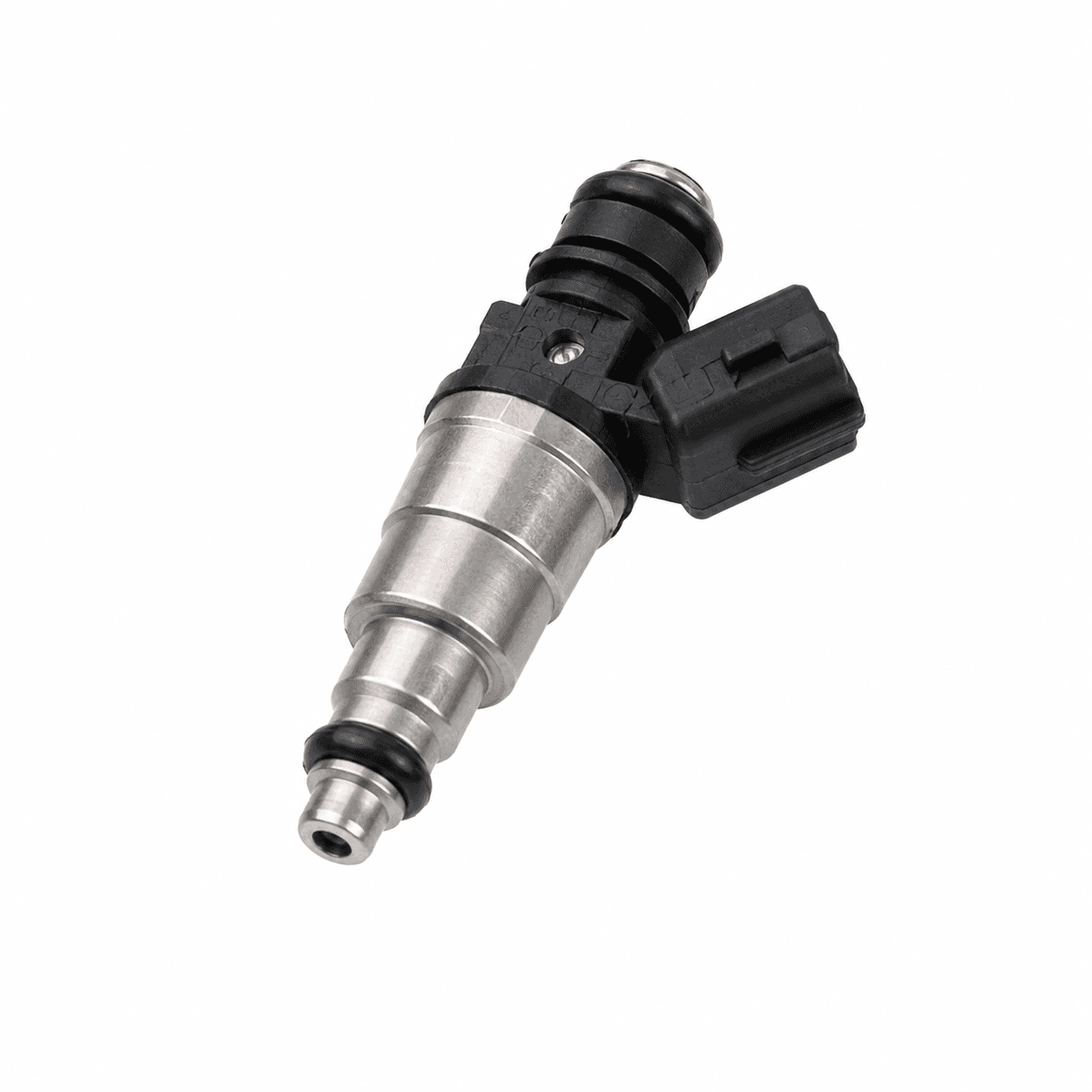
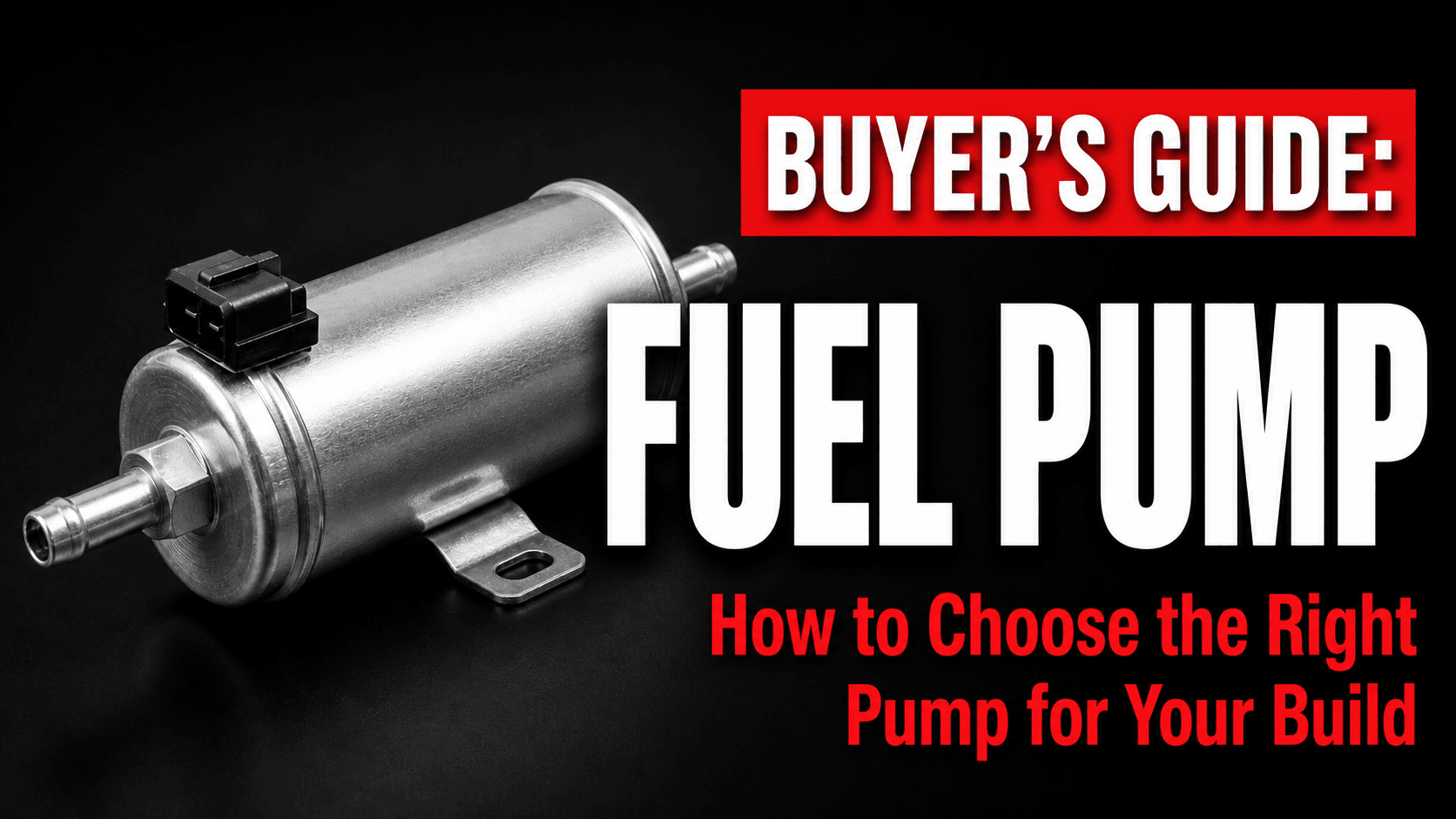
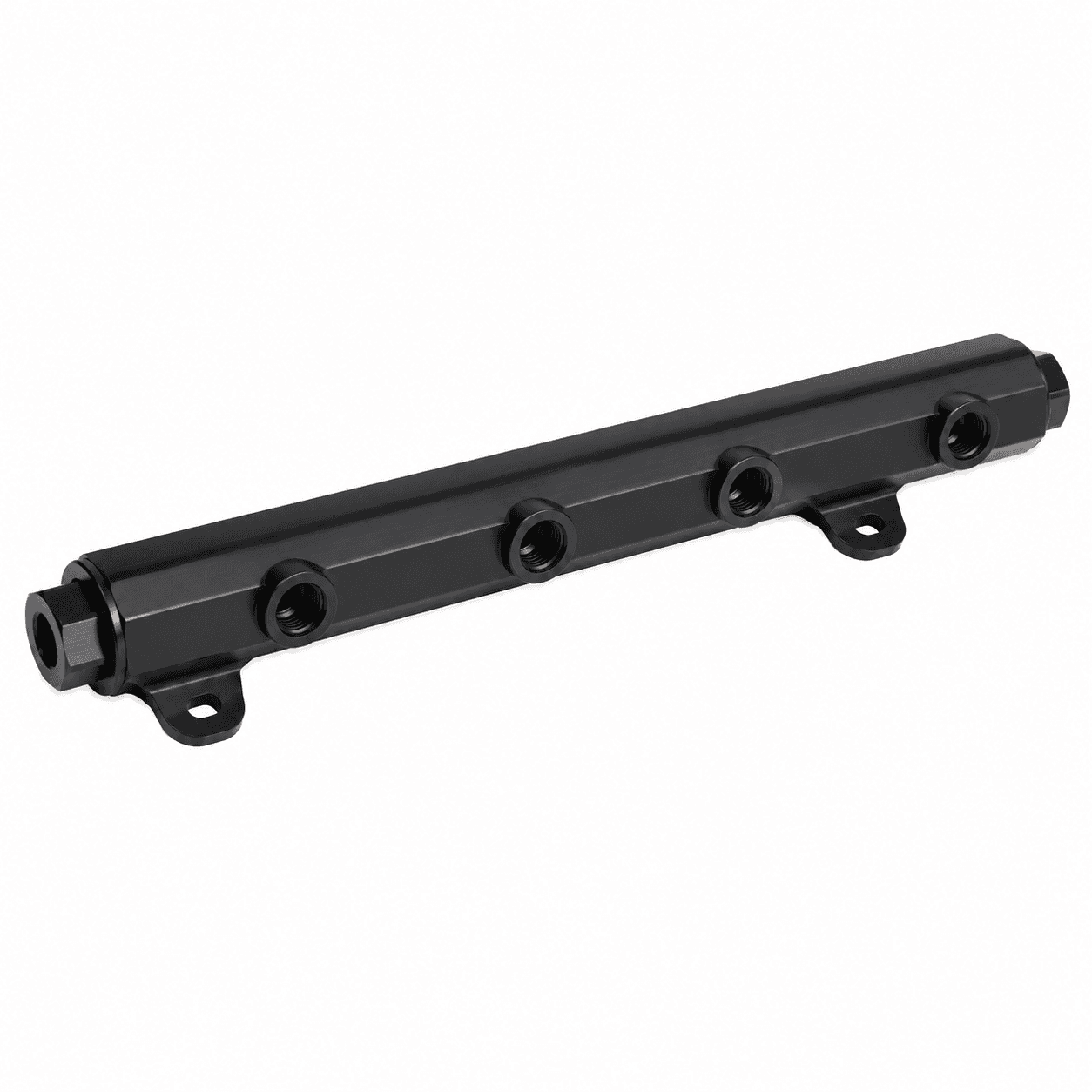
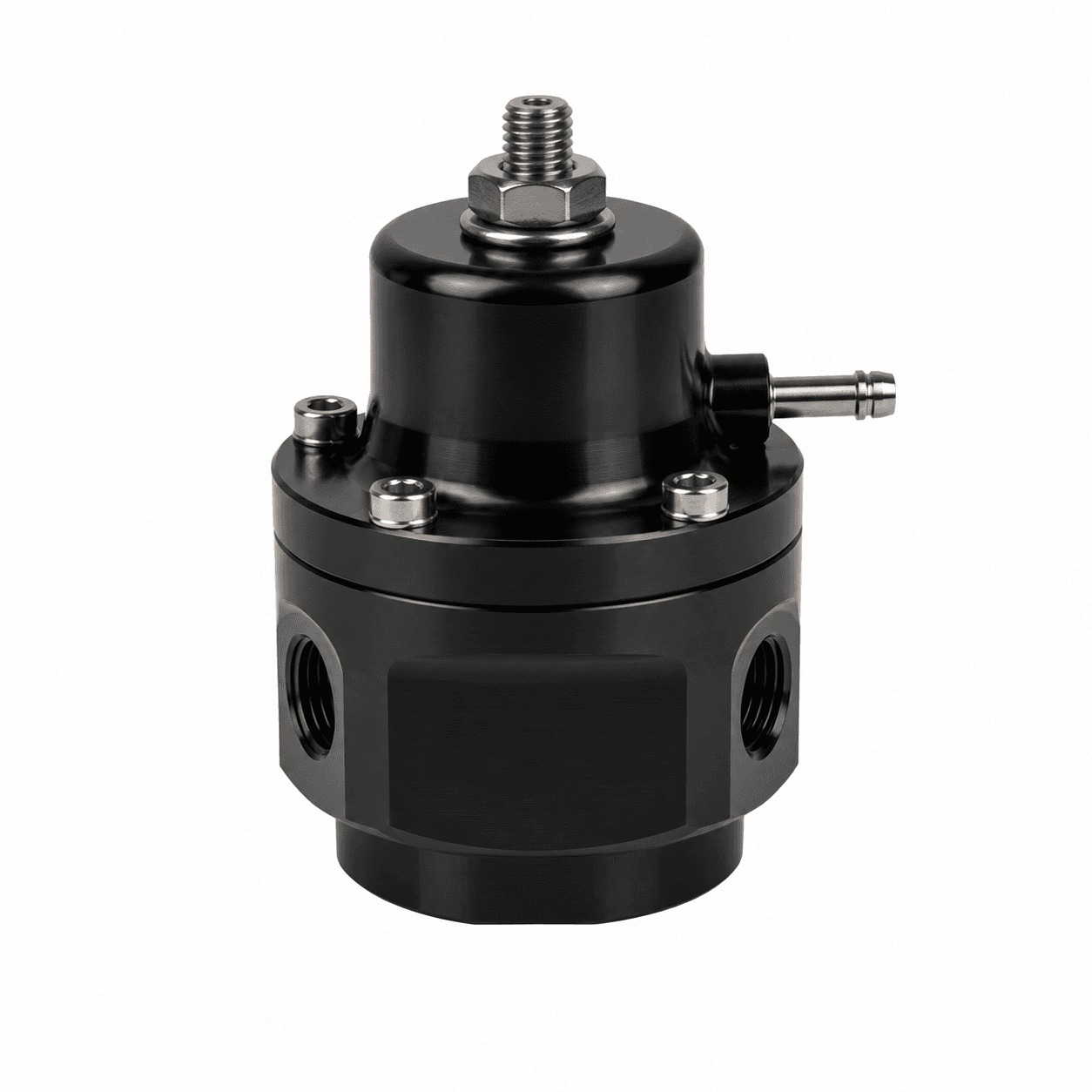
Fuel injectors are electronically controlled valves that deliver fuel into the engine as a fine, atomized mist to promote efficient combustion. Fuel is supplied to the injectors via the fuel rail, which is pressurized by the fuel pump. When fuel arrives at the fuel injector, the following four steps occur:
Injector duty cycle refers to the percentage of time an injector is open during engine operation. For example, a 50% duty cycle means the injector is open half the time. Most injectors should not exceed 80–85% duty cycle at wide open throttle. Beyond this threshold, injector performance becomes non-linear and fuel delivery becomes less predictable.
For this reason, injectors should be sized with headroom to avoid operating at their limits. High quality injectors can be rated to operate at higher duty cycles, however a maximum of 80% duty cycle is a safe and practical limit. An injector operating at 70% duty cycle at maximum power has capacity for further power increases or tuning. An injector already at 85% has none.
BSFC stands for Brake Specifics Fuel Consumption which means how much fuel your engine consumes per hour for each horsepower generated. BSFC depends on your engine, fuel, and tune but can be reasonably approximated based on your induction type and fuel.
Compatibility and Fitment
Selecting the correct injector size is only part of the purchasing decision. Several other factors determine whether a given injector will integrate correctly into your vehicle's fuel system and engine management.
Connection Type → Electrical Compatibility
The connector determines whether your vehicle's wiring harness can plug into your new injector. Common connector types include EV1, EV6 (USCAR), EV14, and Denso, among others. Adapter pigtails are widely available and allow mismatched connectors to be used without rewiring, though matching connectors natively simplifies installation and avoids wiring headaches.
Impedance → ECU Compatibility
Your new injector's impedance must match your ECU's control strategy.
- High impedance Injectors (10–16Ω) are the standard for the vast majority of street and performance applications. They are compatible with most factory and aftermarket ECUs without additional circuitry and should be the default choice for nearly all buyers.
- Low Impedance Injectors (2–5Ω) offer faster solenoid response times and are used in high-performance and racing applications where precise fuel delivery at very high RPM is critical. Low impedance injectors require an ECU with a peak-and-hold driver circuit to control them correctly. Using low impedance injectors with an ECU not designed for them will damage both the injectors and the ECU.
O-Ring Size and Fitment → Mechanical Compatibility
Injectors seal to the fuel rail at the top and to the intake manifold at the bottom using O-rings. The two most common O-ring diameters are 11mm and 14mm. Both ends must match your application to ensure a proper seal and prevent fuel leaks. Always lubricate O-rings during installation to prevent tearing during assembly.
Injector Height → Fitment & Installation
Injector height is measured between the centerline of the upper O-ring and the centerline of the lower O-ring. If replacement injectors differ in height from the stock units, the fuel rail mounting position changes accordingly. For taller injectors, verify that the fuel rail mounting bolts have sufficient thread engagement into the intake manifold. For shorter injectors, spacers or adapters may be required to maintain correct fuel rail positioning and sealing.
ECU Tuning
After upgrading your fuel injectors, you must tell your ECU about the new injectors flow rates, or else the engine will run incorrectly. This can be accomplished either through a performance tune or using an aftermarket ECU.
Legal/Emissions Compliance
Modifying the fuel system can impact emissions compliance and inspections. Legality varies by region - always check local rules.
Conclusion
Fuel injectors play a critical role in delivering precise and consistent fuel to your engine, directly impacting performance, efficiency, and reliability. When upgrading, start by accurately estimating your fuel requirements, then select injectors with sufficient flow capacity and proper headroom. From there, confirm compatibility with your vehicle's electrical system and fuel hardware. When properly sized and tuned, upgraded injectors ensure your engine receives the fuel it needs to safely support increased power and operate at its full potential. You can find all the parts you need and plan your build on RideBuilder.
Additional Resources